Login
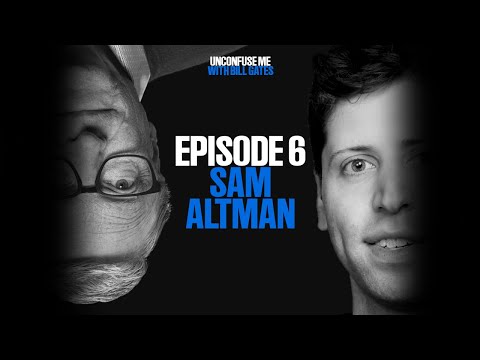
Episode 6: Sam Altman - YouTube
Key Insights
Bill Gates interviews Sam Altman, CEO of OpenAI, about advances in AI and how to ensure it benefits humanity. They discuss interpreting neural networks, rapid progress in language models, policy ideas like regulating powerful systems, and the challenges of maintaining human purpose and reducing harms as capabilities increase.
Mindmap
Chapters
Background on Sam Altman and OpenAI
00:00:01-Sam Altman is the CEO of OpenAI and has been an entrepreneur and leader in tech
00:00:07-He previously ran Y Combinator, which funded companies like Reddit, Dropbox, and Airbnb
00:00:11-OpenAI was founded to build safe and beneficial artificial intelligence
Discussion on AI progress and ChatGPT
00:00:57-Bill Gates was skeptical but impressed by how good ChatGPT got so quickly
00:02:10-They don't fully understand how ChatGPT's knowledge is encoded in its parameters
00:02:21-Sam believes they will gain a better understanding of these models within 5 years
Scaling laws of AI and the importance of scientific understanding
00:03:48-Early AI progress came from empirical discoveries before understanding why things worked
00:03:56-As understanding deepened, it allowed for much better and more efficient models
Applications of AI and its impact
00:12:13-Coding/programming is an area seeing significant productivity gains from AI today
00:12:31-Healthcare and education are also areas that could greatly benefit from AI
The future of AI
00:05:08-Multimodality, reasoning ability, reliability, customization will be key areas of progress
00:12:55-AI may eventually be able to start and run companies or discover new physics
Societal and economic impacts of advanced AI
00:14:37-AI progress could force society to adapt faster than ever before
00:14:41-Driving down the cost of energy and intelligence could massively improve lives
Safety and governance of powerful AI systems
00:08:38-A global regulatory body may be needed to oversee super powerful AI systems
00:09:07-Most regulations should aim to enable progress while mitigating specific risks